What is the ISO 17712 standard?
ISO 17712 is the international standard that establishes the performance requirements, mechanical strength, and test procedures that security seals used on freight transport containers must meet. It was developed by the International Organization for Standardization (ISO), and its current version is ISO 17712:2013.
Its scope covers seals intended for 20-foot and 40-foot ISO containers (TEU and FEU), semi-trailers, railway wagons, and any cargo unit operating in international traffic. It does not expressly cover security bags or small-format plastic seals, although many manufacturers apply its criteria voluntarily.
Context and origin de la norma
The proliferation of incidents related to smuggling, terrorism, and cargo theft in the 1990s led the international customs community to require objective criteria for assessing the suitability of seals. In 2003, the World Customs Organization (WCO) published the SAFE Framework, which recommended the use of high-integrity seals in international trade.
At the same time, the U.S. Customs C-TPAT (Customs-Trade Partnership Against Terrorism) program began requiring the use of certified seals on all container imports. Both pressures drove the creation and adoption of ISO 17712, which in 2013 was revised and consolidated into its current version.
ISO 17712:2013 replaced the 2010 version and introduced stricter requirements for strength testing and seal identification.
The three categories of the ISO 17712 standard
The standard distinguishes three levels according to the seal’s mechanical strength and its ability to provide evidence of tampering:
Category I — Indicative
An indicative seal provides evidence of opening, but it does not offer significant physical resistance against a deliberate opening attempt. It is identified by the letter “I” engraved or printed on the body. It is sufficient when the risk comes from accidental openings or unauthorised personnel with basic means.
- No minimum tensile strength requirement in the standard
- Irreversible evidence visible to the naked eye after opening
- Widely used on cardboard boxes, utility boxes, and low-risk routes
Category S — Security
Identified by the letter “S”, this level adds quantified mechanical strength. Cable seals in this category must pass a minimum tensile test. The standard requires at least 1 kN tensile strength (equivalent to approximately 100 kg-force) before failure.
Its use is recommended for containers on medium-to-high-risk routes and is accepted by the C-TPAT and AEO programmes for certain categories of goods.
Category H — High Security
The most demanding category is identified by the letter “H”. It requires passing tensile, side-cut, and cold-resistance tests with much higher minimum values:
- Tensile strength: ≥ 20 kN (≈ 2 tonnes-force)
- Side-cut resistance: ≥ 11 kN
- Low-temperature performance: the seal must maintain its integrity at –40 °C
Category H is mandatory under the C-TPAT programme requirements for containers on high-risk routes and in many international maritime transport contracts.
Certification tests establecidos en la norma
To obtain and maintain ISO 17712 certification, manufacturers must submit their seals to a series of tests carried out by accredited laboratories. The main tests are:
| Test | Category S (minimum) | Category H (minimum) |
|---|---|---|
| Axial tensile strength | 1 kN (100 kgf) | 20 kN (2.040 kgf) |
| Lateral cable cut | Not specified | 11 kN (1.120 kgf) |
| Low temperature (–40 °C) | Not specified | No embrittlement |
| Evidence of opening | Mandatory | Mandatory |
| Serial number uniqueness | Mandatory | Mandatory |
In addition to the mechanical tests, the standard requires each seal to carry a unique, non-repeatable serial number, permanently engraved or printed and legible without additional instruments.
Our high-security models have passed the tests required by the standard. Request the technical data sheet and certificate of conformity.
Relationship with the C-TPAT programme and the Authorised Economic Operator (AEO)
These two regulatory frameworks are the main drivers behind the widespread adoption of ISO 17712-certified seals in global trade.
- C-TPAT (U.S.)
- The Customs-Trade Partnership Against Terrorism programme, administered by U.S. Customs and Border Protection (CBP), requires all members to use ISO 17712 high-security seals on containers entering U.S. territory. Non-compliance may result in systematic inspections, delays, and loss of the company’s preferred status.
- OEA / AEO (EU)
- The European Union’s Authorised Economic Operator programme — the European equivalent of C-TPAT — also includes the use of certified seals as part of the supply chain security criteria that the applicant must demonstrate.
For companies exporting to the U.S. or serving customers who import from there, using ISO 17712 High Security seals is not optional: it is a contractual and customs requirement.
How to verify that a seal is genuinely certified
The market includes seals that claim to comply with the standard but have not been tested by an accredited laboratory. To avoid problems in audits or claims, it is advisable to follow these steps:
- Request the test certificate issued by a laboratory accredited by a national accreditation body (such as ENAC in Spain).
- Verify that the certificate specifies the category (S or H) and the exact seal model.
- Check that the seal body is engraved with the letter “S” or “H” next to the serial number — an explicit requirement of the standard.
- Check whether the manufacturer has ISO 9001:2015 for the manufacturing process (an additional quality-control guarantee).
Security seals Lockwise certificados bajo ISO 17712
Two models in our range have passed ISO 17712 certification tests in an accredited laboratory:
| Model | ISO 17712 category | Tensile strength | Cable diameter |
|---|---|---|---|
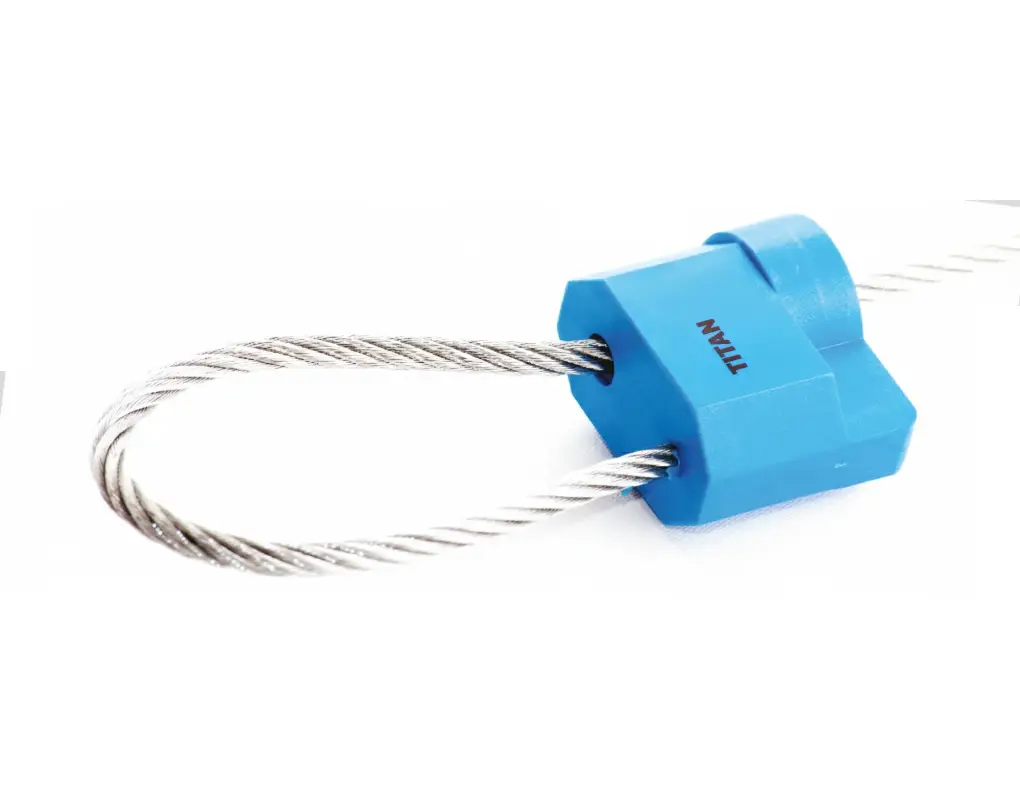
| Titan | High Security (H) | 20 kN (~2 t) | High resistance (see datasheet) |
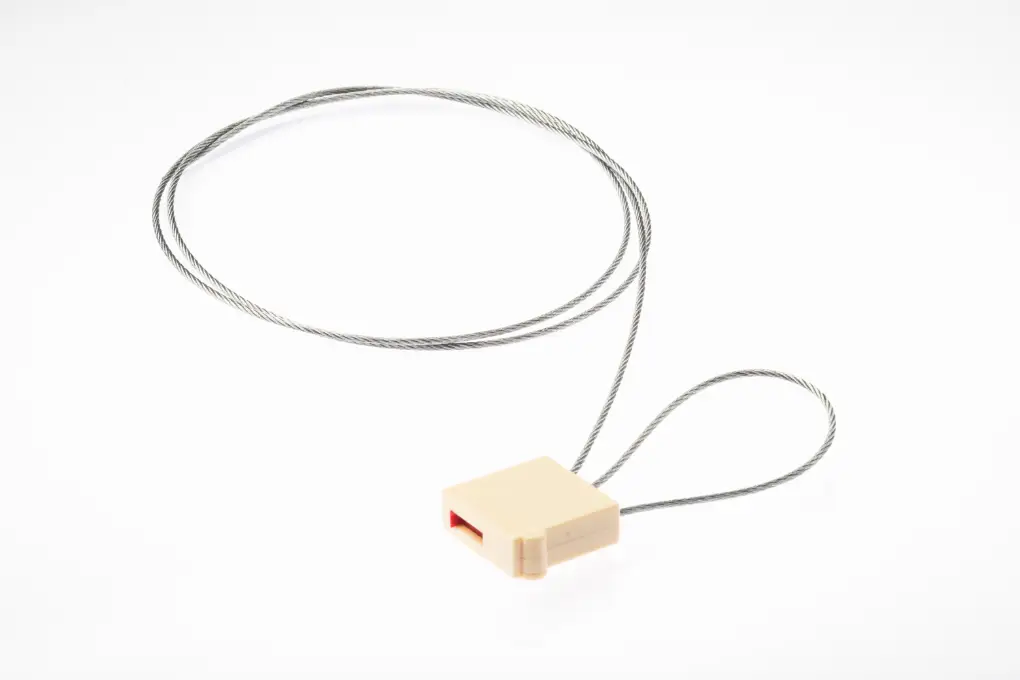
| LockIn 2.25 | Security (S) | 900 kg (~9 kN) | 2,25 mm |
Both models include unique sequential numbering, are C-TPAT approved, and are manufactured under ISO 9001:2015 quality control. Test certificates are available on request.
Conclusion
ISO 17712 is much more than a quality label: it is the common language that allows exporters, shipping lines, customs authorities, and customers worldwide to talk about security using objective and verifiable criteria. Knowing its three categories, the tests it requires, and how to validate a real certificate is an essential competence for any logistics or procurement manager working in international trade.
If you need certified seals for your export, import, or transit operations, contact Lockwise and we will provide all the technical documentation you need.