Introduction
In the modern logistics ecosystem, cargo security begins long before a truck or container starts moving. Security seals are the first physical and visual barrier against unauthorized tampering with goods, documents and equipment. Choosing the right type is not a minor detail: an unsuitable selection can compromise audits, invalidate insurance claims or, in the worst case, allow thefts that could have been prevented.
This guide outlines the technical and operational criteria that should guide the purchase decision for seals in any company managing supply chains, from logistics operators to manufacturers, retailers and banking institutions.
What is a security seal?
A security seal is a single-use locking device designed to reveal any attempt at opening. Unlike a simple padlock, a seal does not physically prevent access, but it does ensure that any opening leaves clear and verifiable evidence. Its value lies precisely in that proof of integrity: the person receiving the shipment can check at a glance whether the seal is intact or has been tampered with.
"A seal does not prevent theft, but it makes it impossible to hide. That radically changes the risk equation for any offender."
Main types of seals
The market offers four main seal families, each with a different strength, cost and application profile. Understanding their characteristics is the first step toward making an informed decision.
Plastic seals
They are the most widely used due to their versatility and low unit cost. Usually made of polypropylene or nylon, they support laser numbering, hot stamping and QR or barcode marking. They are ideal for low- or medium-risk applications where usage volume is high.
- Tensile strength: 15–25 kg depending on model
- Available in multiple colours and lengths
- Full customisation: logo, serial number, QR, barcode
- Ideal for retail, general road freight and cash bags
Cable seals
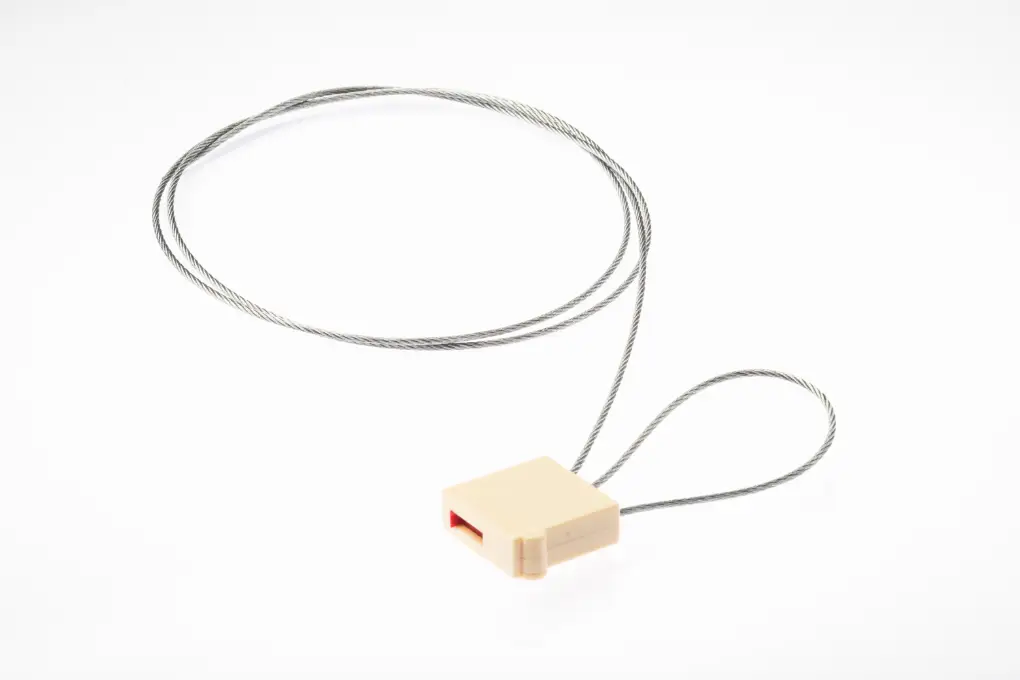
They combine a braided steel cable with an ABS or metal-alloy body. Their tensile strength ranges from 100 to 2,000 kg depending on cable diameter and body material. They are the standard solution for truck doors, domestic transit containers and controlled-access industrial facilities.
Our specialists can recommend the exact model and strength level for each type of vehicle or facility.
Metal seals
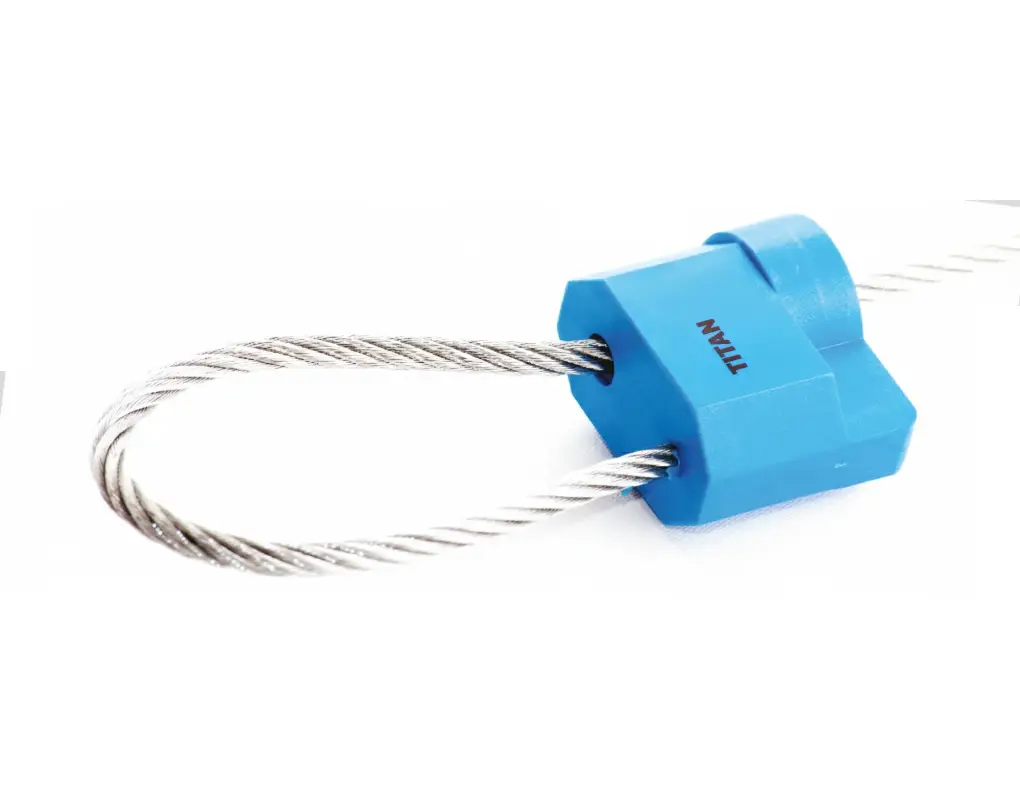
They represent the most demanding industry standard and are mandatory or recommended for operations governed by ISO 17712. Manufactured in carbon steel or stainless steel, some models reach breaking strengths above 20 kN (approximately 2 tonnes of force). Our Titan model, certified as ISO 17712 high security, is C-TPAT approved and is the reference seal for sea containers and international customs traffic.
| Lockwise model | Strength | Certification | Main application |
|---|---|---|---|
| Titan | 20 kN (~2.000 kg) | ISO 17712 Alta Security + C-TPAT | Sea containers, customs |
| LockIn 2.25 | 900 kg | ISO 17712 Security + C-TPAT | Truck doors, domestic transit |
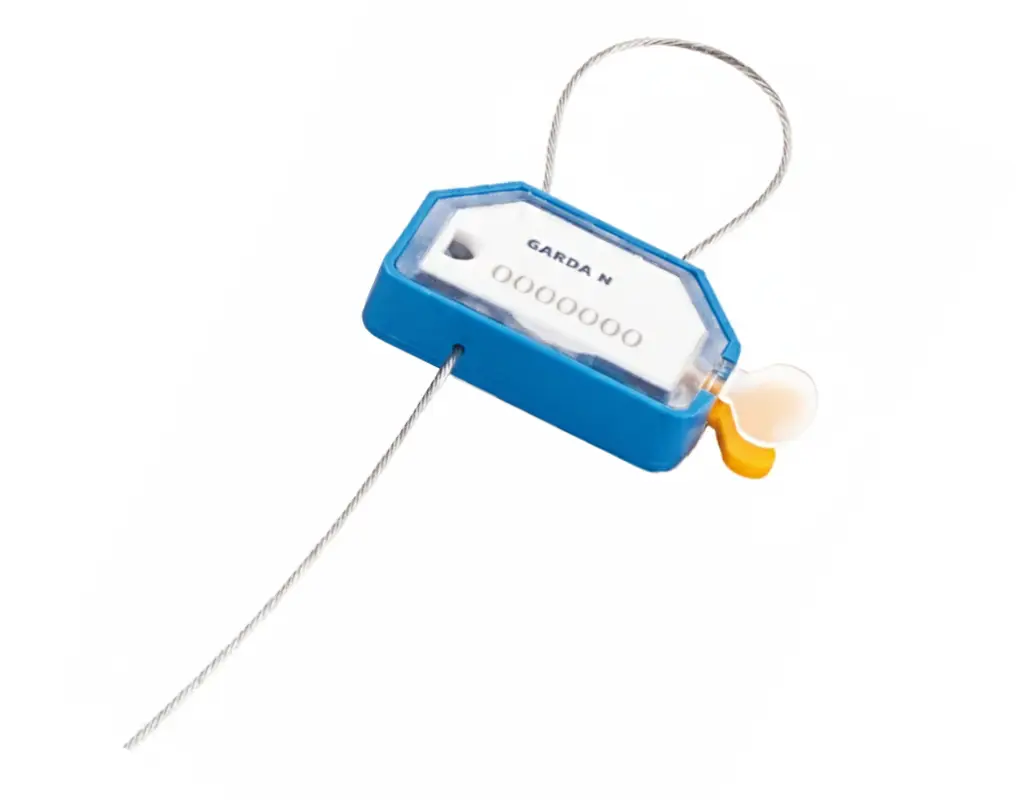
| Garda N | 150 kg | — | Warehouses, trucks, facilities |
Meter seals
Designed specifically for water, gas and electricity meters, this type of seal must meet additional requirements: resistance to extreme temperatures, UV radiation and environmental chemicals. Our patented OliLock (patent no. 4034) and MeterLock (patent no. 4534) models were developed at the request of utility companies to solve the specific challenges of energy supply networks.
Features that distinguish them from a conventional seal:
- Specific attachment to the meter type (thread, clip, pin)
- Resistance to tampering with common tools
- Embossed numbering resistant to solvents
- Compatibility with asset management systems
How to choose the right seal
Choosing the right seal depends on a combination of three variables: the operation’s risk level, the usage environment and the applicable regulatory requirements.
| Risk level | Recommended type | Minimum strength | Examples of use |
|---|---|---|---|
| Indicative | Plastic | 15–25 kg | Retail, mail, internal pharmaceutical chain |
| Medium | Cable ABS | 100–500 kg | Trucks, warehouses, cash-in-transit |
| High | ISO metal | +900 kg | Containers, customs, export |
| Infrastructure | Patented meter seal | Specific | Water, gas and electricity networks |
In addition to the risk level, the following factors should be considered before making a decision:
Key regulations and certifications
International trade operations are subject to regulations that require seals with verifiable minimum characteristics. The main global reference is the ISO 17712:2013 standard, which classifies container seals into three categories:
- Indicative (I): shows tampering but offers low mechanical strength. Not valid for foreign trade.
- Security (S): minimum tensile strength of 1,000 N (approx. 100 kg). Valid for international land transit.
- High Security (H): strength ≥ 1,500 N in tension and ≥ 1,000 N in shear. Required by C-TPAT regulations (U.S. customs) and recommended by the WCO for sea containers.
Our Titan (high security) and LockIn 2.25 (security) seals are certified under ISO 17712 and C-TPAT approved, which facilitates customs clearance at ports worldwide and meets the requirements of the U.S. customs supply chain security programme.
Best practices
The effectiveness of a seal depends not only on its intrinsic quality but also on how its lifecycle is managed. These are the recommendations we apply with our industrial clients:
- Full numerical record: each seal must be linked to a transport document, a vehicle registration number or a shipment number. Without traceability, the evidence loses legal value.
- Correct application: the seal must be installed with the proper tension, without slack that allows tampering. In cable seals, the end must be fully locked in place.
- Verification at destination: the recipient must visually inspect the seal before opening the cargo and document any anomaly with photographs and a written report.
- Batch segregation: seals assigned to different customers or routes must not be mixed. They should be stored in closed packaging until use.
- Staff training: the weakest link is usually human. An untrained worker may install the seal incorrectly or fail to detect signs of tampering.
- Incident protocol: any unexpected opening must generate an immediate report, with the removed seal preserved as evidence for potential claims or investigations.
Conclusion
Choosing the right seal is a technical decision with direct operational and economic consequences. Unit price is usually the variable that should weigh least in the decision: the cost of an undetected incident—or an insurance claim rejected due to insufficient evidence—far exceeds any savings in seal cost.
If you are unsure which product best suits your operation, our team can advise you with no obligation. We work with logistics, banking, energy and retail companies across Spain and Europe, and we know the requirements of each sector first-hand.